Should You Cover a Puppy Crate? (And How to Do It Safely)
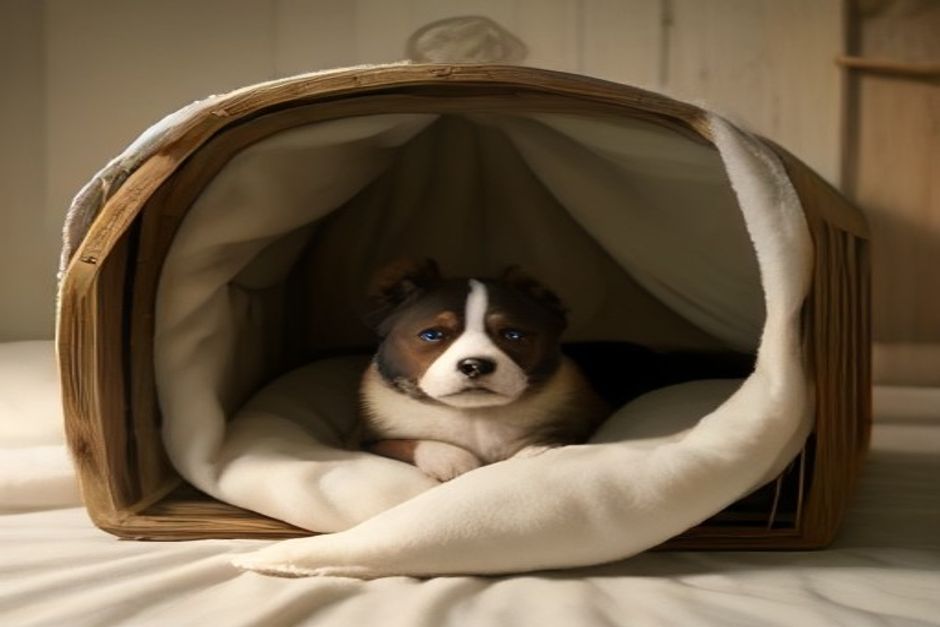
Should you drape a blanket over your puppy's crate? It's one of the most common questions new owners ask, and the answer is a satisfying "it depends — but usually it helps." Dogs are den animals, and for many puppies a covered crate becomes a cozy, secure retreat that makes settling and sleeping easier. For others, being boxed in feels worse than being able to see out. Here's how to decide, and how to do it safely.
Why covering a crate often helps
A cover works by tapping into your puppy's natural instincts and reducing overstimulation:
- It creates a den. Dogs instinctively seek small, enclosed spaces to rest. A covered crate feels like a safe burrow.
- It blocks distractions. Passing people, other pets, headlights, and household movement all keep a puppy "on alert." A cover cuts that visual noise so they can switch off.
- It signals rest time. Just like dimming the lights for a baby, covering the crate becomes a cue that it's time to settle and sleep.
- It can ease the witching hour. Over-tired puppies often struggle to wind down; a calmer, darker space helps.
For a lot of puppies, that combination is the difference between pacing and settling.
When not to cover the crate
A cover isn't universal. Skip it, or use it only partially, if:
- Your puppy seems more anxious covered. Some dogs feel safer being able to see their surroundings. Watch the response — more whining, pawing, or panic when covered means it's not for them.
- It's warm. A cover can trap heat. In warm rooms or weather, leave it off or use minimal covering to keep airflow and temperature safe.
- Your puppy is a determined chewer. A puppy who pulls the cover through the bars and chews it creates a swallowing/choking hazard (more on safety below).
The goal is a calmer puppy, not a trapped one. If covering makes things worse, it's simply not the right tool for that dog.
How to cover a crate safely
If you try it, a few precautions keep it safe:
- Use a breathable material. A proper crate cover or a light, breathable blanket — never anything heavy or airtight. Air must flow freely on all sides.
- Never fully seal the crate. Leave at least one side or the front partly open for ventilation and so your puppy doesn't feel completely closed in.
- Keep it away from chewers. If your puppy grabs and chews fabric, either skip the cover or use a chew-proof cover, and always supervise. Swallowed fabric is a real hazard.
- Watch the temperature. The covered space should stay comfortable, never stuffy or hot. Check it with your hand.
- Secure it so it can't collapse in or be dragged around.
Try the "partial cover" approach first
Not sure how your puppy will react? Start in the middle:
- Cover the back and sides, leaving the front open. This gives a den feel while your puppy can still see out.
- Watch how they settle. Calmer and quieter? Great.
- If they do well, try covering more of the front at night, still leaving an air gap.
- If they get more anxious at any point, back off. Let your puppy tell you what works.
This gradual approach lets you find each puppy's sweet spot instead of guessing.
Covering the crate is only part of the picture
A cover helps a puppy settle — but it won't override a genuine need. Before assuming a cover will stop the crying, make sure you've handled the basics of a calm crate routine:
- A potty trip right before crate time (a full bladder trumps any cover)
- Enough exercise and enrichment so they're ready to rest, not wired
- A comfortable, correctly sized crate with safe bedding
- A consistent, low-drama routine around going in and coming out
Get those right, add a cover if your puppy likes it, and you've got a genuinely restful setup. (New to crates? See our full guide to crate training a puppy.)
The bottom line
Covering a puppy's crate helps many dogs by creating a calm, den-like space that blocks distractions and cues rest — but it's not right for every puppy, and it must be done safely: breathable material, never fully sealed, no cover for determined chewers, and mindful of temperature. Try a partial cover, watch your puppy's response, and let them show you what feels secure. Done thoughtfully, it's a simple trick that can make crate time noticeably calmer.
Frequently Asked Questions
Should I cover my puppy’s crate at night?
For many puppies, yes — a cover can create a cozy, den-like space that blocks distracting light and movement and helps them settle and sleep. But it’s not right for every puppy: some feel more secure being able to see out. Try it, watch your puppy’s response, and use partial covering if a full cover seems to stress them.
Is it safe to cover a dog crate?
It can be, with a few precautions: use a breathable material so air flows freely, never fully seal the crate, keep the cover away from a chewing puppy who might pull it in and swallow pieces, and make sure the space doesn’t get too warm. A proper breathable crate cover or a light blanket used carefully is generally safe.
Does covering a crate help with puppy crying?
It often helps, because reducing visual stimulation makes it easier for an over-tired or over-stimulated puppy to settle. But a cover won’t fix crying caused by a full bladder, hunger, or genuine distress. Use it as one part of a calm crate routine, not a cure-all — and always rule out a potty need first.
Related Guides
This is general training and care guidance. Always prioritize safe ventilation and temperature, supervise puppies with any fabric they might chew, and consult your veterinarian or a qualified trainer if your puppy shows signs of genuine distress or possible separation anxiety in the crate.